
Africa | Smallholder farmers
7 Things We Learned From Coffee Farmers
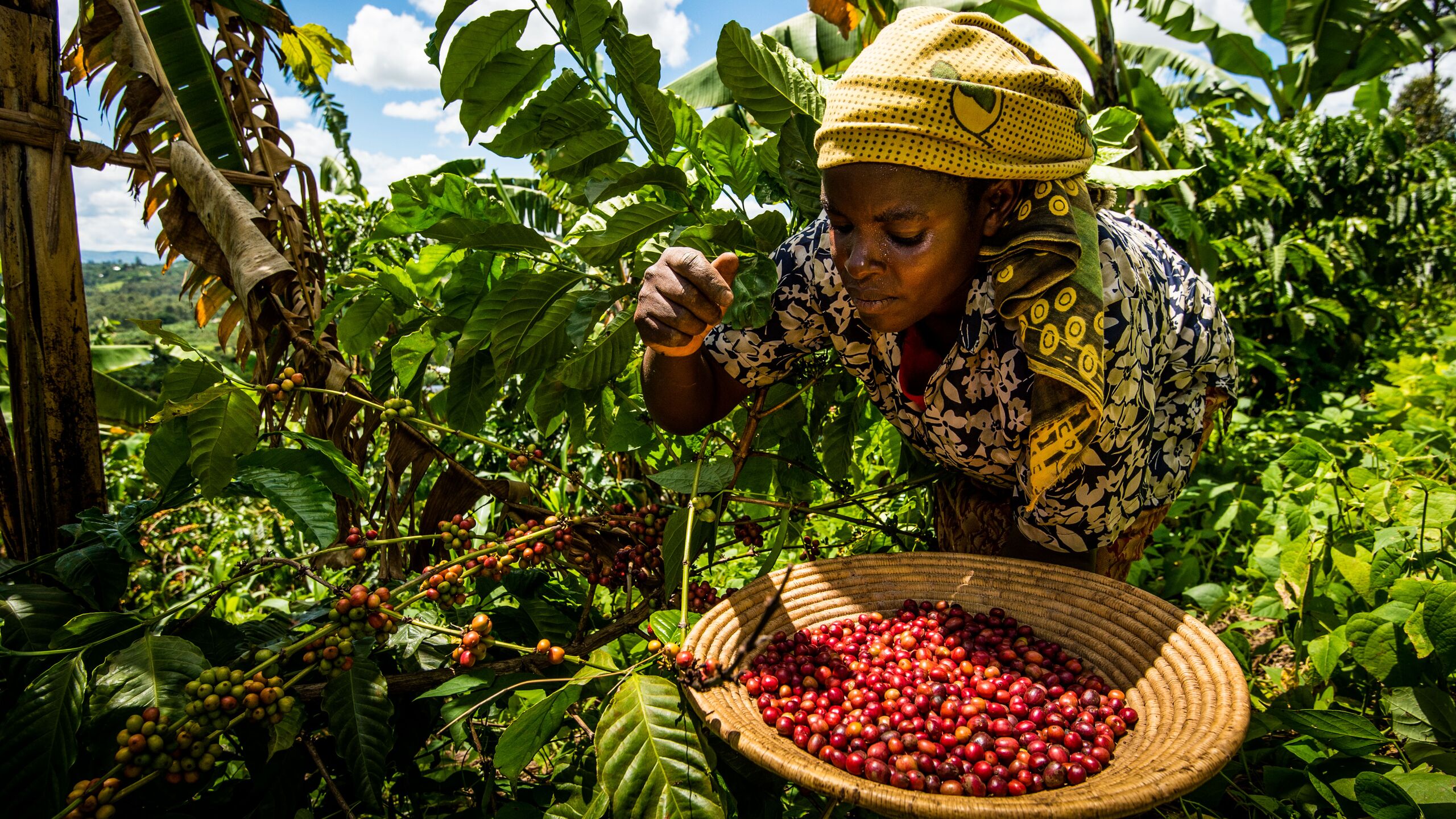
Rabo Foundation participated in the Coffee Farmer Thriving Index, an initiative from 60 Decibels in partnership with the Small Foundation. A way to hear directly from farmers in supply chains about their own wellbeing. Explore the seven findings that stand out from that research and what they can mean for organizations working to strengthen inclusive, resilient agricultural value chains.
About 60 Decibels
60 Decibels is an impact measurement company that helps organizations around the world better understand their customers, suppliers, and beneficiaries. Its proprietary approach, Lean Data, brings customer-centricity, speed and responsiveness to impact measurement. To learn more, visit 60decibels.com.
1. Profitability is not a given for all coffee producers
A significant share of farmers reported that coffee did not translate into profit last year. In Uganda, more than one-third said they made no profit, and 21% reported losses. Farmers pointed to exposure to market fluctuations and climate conditions, which can make harvest outcomes unpredictable.
2. Half of the coffee farmers surveyed are vulnerable to financial shocks
Financial resilience remains fragile for many farmers. In Uganda, 46% said they did not save any money in the past year, while 22% saved only occasionally. Many farmers said that accessing emergency funds would be difficult—especially for those with less stable or diversified income.
3. Access to critical services is low
Only 19% of farmers in Uganda reported having reliable access to agricultural extension—a key enabler for adopting more resilient practices. While intercropping was common (71%), fewer than half reported composting, and less than a quarter reported practices such as water conservation or biological pest control. Extension coverage varies by region with 41% of farmers in Western Uganda reporting access. Access to other essential services is also low—insurance (2%), weather alerts or information (12%), and credit (11%)—and varies by region.
4. A third of households are food stressed
Across Uganda, 57% of farmers were classified as experiencing “minimal” food insecurity, while 29% were classified as “food stressed.” Food security challenges were more pronounced for households surveyed during the growing season (when coffee is not being harvested), and some regional differences were observed.
5. Yet farmers aren’t giving up on coffee
Nearly all farmers surveyed expected to continue producing coffee for at least the next 5–10 years. To better understand how farmers view the long-term prospects of coffee farming, 60 Decibels also asked whether farmers would want their children to grow coffee as adults; 81% strongly agreed. Also, 73% of growers plan on increasing their investment in coffee for the upcoming seasons primarily by expanding their land or adopting better practices or inputs.
6. Coffee processing adds value for farmers
Despite the pressures farmers face, 73% said they plan to increase investment in coffee in the coming seasons—often by expanding land or improving practices and inputs.
In Uganda, 55% reported selling most of their coffee as parchment, while others sold most as raw cherries. Selling as parchment was associated with better prices and a higher likelihood of reporting profitability, and it also correlated with stronger financial resilience and food security indicators.
7. The participating cooperatives are enabling farmer wellbeing
Farmers linked to participating cooperatives reported stronger access to services compared to the national benchmark. In the study, farmers associated with four participating Ugandan cooperatives were more likely to report reliable access to at least one essential service (80% vs. 51%).
Agricultural extension access was notably higher among cooperative farmers, who were more likely to adopt resilient practices (including intercropping, composting, and water conservation). Cooperative farmers also more often reported receiving good prices, earning profits, saving regularly, and being able to manage emergencies.
Why these insights matter for Rabo Foundation
The Coffee Farmer Thriving Index helps Rabo Foundation and its partners move beyond assumptions and ground decisions in farmers’ lived experiences. By participating in this Index, our clients contribute insights directly from the farmers they work with—covering profitability, resilience, food security, and access to services.
We use these insights to, for example, for:
By listening systematically to farmers through the Coffee Farmer Thriving Index, Rabo Foundation can better support its clients in building inclusive, resilient coffee value chains and turn insight into action at scale.
This story is an adapted version of an article originally published by 60 Decibels: “7 Things We Learned From Farmers in the Coffee Supply Chain.” Read the original on the 60 Decibels website.
Curious to dive deeper? Download the Coffee Farmer Thriving Index for more insights